2025. 7. 29. 10:00ㆍEnglish
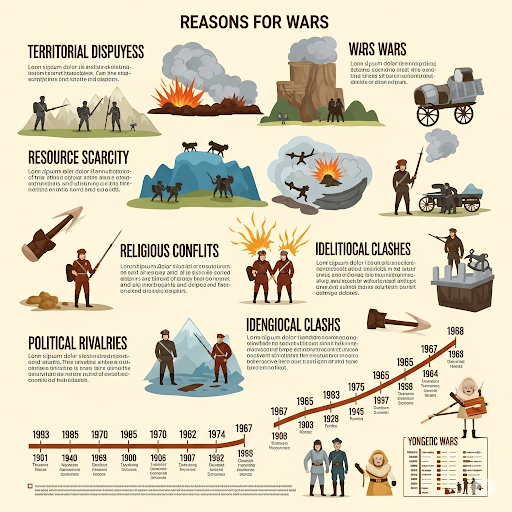
📘 Why Do We Have Wars?
When I hear the word “war,” it immediately brings painful images to my mind—ruined cities, crying families, and countless lives lost. It makes me wonder why wars have continued for centuries. Although there are countless reasons, I would like to explain three key causes from my perspective.
1️⃣ Tyrannical Leaders
First, wars often begin with a tyrannical leader. Such a leader is filled with greed and believes he is always right, even when his actions harm millions. History shows that many wars started because of one person’s desire for power and control.
2️⃣ Extreme Ethnocentrism
Second, wars are caused by extreme ethnocentrism—when people think their race or culture is superior to others. In some cases, they even dehumanize others, comparing them to insects or animals. This dangerous mindset creates hatred and leads to violent conflict.
3️⃣ Competition Between Nations
Third, competition between nations can also lead to war. Some countries want to advance their military power or technology faster than their rivals. Instead of cooperating, they may exploit weaker nations, using their people or land for selfish experiments or expansion.
🌏 Conclusion
In conclusion, wars bring nothing but catastrophic destruction and deep devastation. They create poverty, suffering, and countless innocent deaths. To prevent this, we must value communication and understanding. Dialogue is the strongest tool we have. Before taking any violent action, leaders must think deliberately and consider peaceful solutions first.
Ultimately, war is not an answer but a failure of humanity to solve problems wisely. If we commit to empathy, education, and respect, we can build a future where war is no longer necessary.
📘 왜 우리는 전쟁을 하나요?
전쟁이라는 단어를 들으면 폐허가 된 도시, 울부짖는 가족, 수많은 희생자가 떠오릅니다. 왜 전쟁이 수세기 동안 반복되었는지 궁금합니다. 제 생각에는 세 가지 큰 이유가 있습니다.
1️⃣ 폭군 같은 지도자
첫째, 전쟁은 종종 폭군 같은(tyrannical) 지도자 때문에 시작됩니다. 이런 지도자는 탐욕에 가득 차 있고 자신이 옳다고만 믿으며 수많은 사람들을 고통스럽게 만듭니다.
2️⃣ 극단적인 민족중심주의
둘째, 극단적인 민족중심주의(ethnocentrism)는 전쟁의 주요 원인입니다. 자신들의 인종이나 문화가 우월하다(superior)고 믿고 다른 사람들을 벌레처럼 취급하면 증오가 생기고 결국 전쟁으로 이어집니다.
3️⃣ 국가 간 경쟁
셋째, 국가 간 경쟁도 전쟁의 원인입니다. 일부 국가는 기술과 군사력을 빠르게 발전시키려는 욕심에 약한 나라를 침략하거나 그 땅과 사람들을 이용하기도 합니다.
🌏 결론
결론적으로 전쟁은 파괴적(catastrophic) 피해와 깊은 황폐(devastation)만 남깁니다. 이를 막기 위해 우리는 대화와 이해를 중시해야 합니다. 폭력을 선택하기 전에 신중하게 (deliberately) 생각하고 평화적인 방법을 찾아야 합니다.
결국 전쟁은 해결책이 아니라 인류의 실패입니다. 공감과 교육, 존중을 통해 전쟁 없는 미래를 만들 수 있습니다.
📚 필수 어휘 정리
- Tyrannical – 폭군의, 전제적인
- Ethnocentrism – 민족중심주의
- Superior – 우월한
- Catastrophic – 파괴적인
- Devastation – 대규모 파괴
- Deliberately – 신중하게
📑 중요 문법 정리
| 문법 요소 | 예문 | 설명 |
|---|---|---|
| 관계대명사 | A leader who believes he is right | who가 leader를 수식 |
| 부정 강조 | brings nothing but destruction | “오직 ~뿐” |
| 현재완료 | wars have continued | 과거~현재 지속 |
| 의무 표현 | we must value peace | 강한 의무 |
| 부사 강조 | think deliberately | 행동 방식 강조 |
| 명사화 | extreme ethnocentrism | 추상 명사화 |
| 조건절 | If we commit to peace... | 조건 제시 |
| 병렬 구조 | empathy, education, and respect | 같은 품사 나열 |
📌 Copyright Notice
본 글은 중학교 영어 수행평가 참고 자료이며, 저작권은 LearningGuide에게 있습니다.
무단 복제 · 배포를 금합니다.
🔒 © LearningGuide. All rights reserved.